
Tracing Cross-Border Verification Protocols to Multi-Device Prize Pool Access in Interactive Table Environments
Cross-border verification protocols connect user identity checks with multi-device access systems in interactive table environments where prize pools accumulate through live dealer sessions and synchronized gameplay, and these frameworks rely on layered authentication that combines geolocation data with device fingerprinting to maintain compliance across jurisdictions. Operators implement these protocols to ensure that participants can move between smartphones, tablets, and desktop interfaces without losing eligibility for shared prize pools, while regulatory requirements in various regions dictate how data flows between verification servers and gaming platforms.
Core Components of Verification Protocols
Verification begins with initial user registration that collects government-issued identification and address details, after which automated systems cross-reference this information against databases maintained by regional authorities. Once approved, the protocol assigns a persistent user token that travels across devices through encrypted handshakes, allowing seamless reconnection to active table sessions. Data shows that these tokens update in real time when a user switches devices, preventing duplicate entries in prize pool calculations and maintaining accurate contribution tracking from each participant.
Geolocation modules activate during each login to confirm the user's physical location relative to licensed operating zones, and when borders are crossed the protocol triggers additional checks that may include temporary session restrictions until re-verification completes. Researchers at international gaming institutes have documented how these location-based triggers integrate with multi-device logs to flag any inconsistencies that could affect prize distribution.
Multi-Device Synchronization Mechanisms
Interactive table environments require continuous synchronization so that actions performed on one device appear instantly on others, and verification protocols support this by maintaining session states in centralized cloud repositories accessible through secure APIs. When a player switches from a mobile app to a desktop browser the system validates the new device against previously registered hardware signatures before granting access to the same prize pool balance. Studies indicate that latency in these handoffs averages under two seconds in optimized networks, yet fluctuations in connection quality can prompt fallback verification steps that re-authenticate the user on the fly.
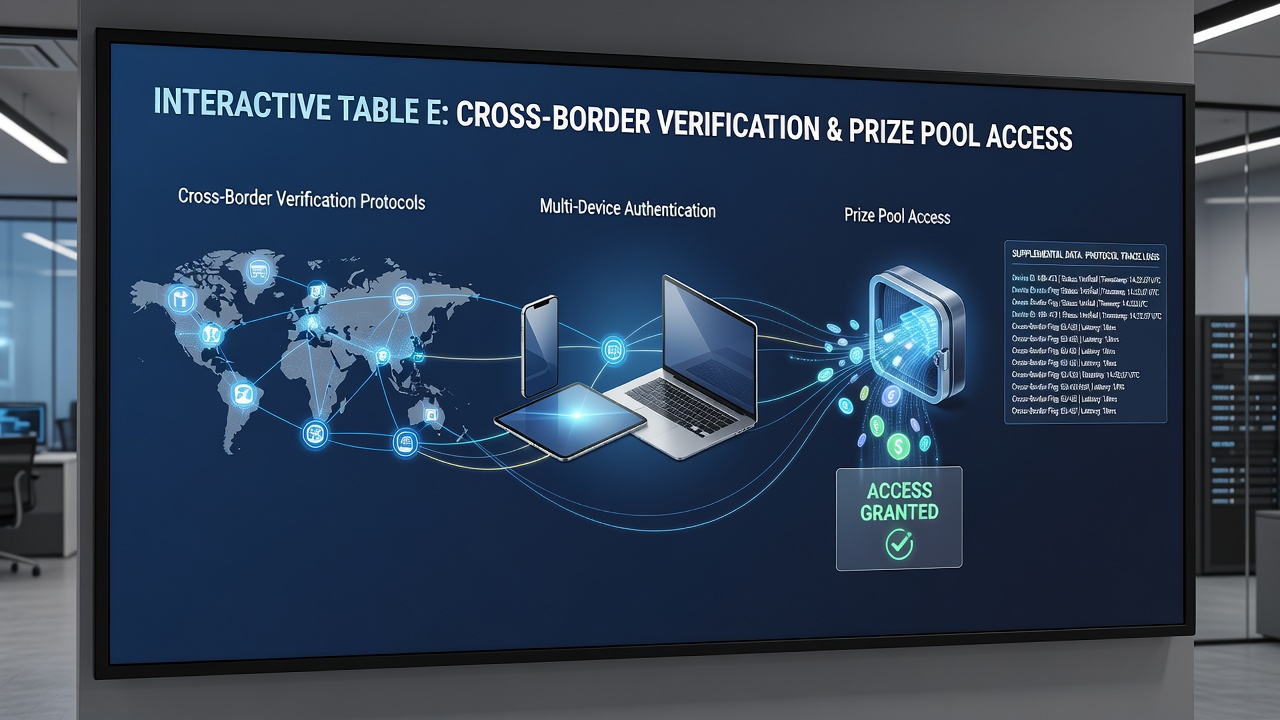
Device registration occurs during the first connection where unique identifiers such as MAC addresses and operating system versions are logged alongside the user token, and subsequent logins compare these markers to detect unauthorized transfers. In October 2026 several operators began rolling out enhanced hardware attestation features that leverage secure enclaves on newer smartphones to strengthen these comparisons and reduce the risk of token sharing across unverified equipment.
Cross-Border Data Flows and Regulatory Alignment
Jurisdictional differences shape how verification data moves between countries, with some regions requiring local data residency while others permit centralized processing under strict transfer agreements. Protocols incorporate region-specific rulesets that activate automatically based on detected location, ensuring that prize pool contributions from users in one area remain segregated from those in another when required by law. According to reports from the Australian Communications and Media Authority, these automated rule engines have reduced manual compliance reviews by approximately 35 percent in participating platforms since their wider adoption.
International standards bodies have contributed technical specifications that allow verification systems to exchange minimal necessary data across borders without exposing full user profiles, and this approach supports multi-device continuity while respecting privacy statutes in each territory. Observers note that successful implementations often rely on modular software architecture where individual compliance modules can be updated independently when regulations change.
Security Measures Supporting Prize Pool Integrity
Encryption standards applied during data transit protect verification payloads that travel between user devices and central servers, and multi-factor authentication supplements token-based access when the protocol detects unusual activity patterns such as rapid device switches or location jumps. These layers work together to safeguard the accuracy of prize pool totals because any compromise in verification could allow ineligible entries or duplicate claims. Industry reports from the European Gaming and Betting Association highlight how integrated logging systems provide audit trails that regulators examine during periodic reviews of cross-border operations.
Testing protocols simulate cross-border scenarios and multi-device transitions to verify that prize allocations remain consistent under varied network conditions, and findings from these exercises feed back into protocol refinements that improve reliability over time. In practice the systems must accommodate both high-volume periods and low-activity windows without introducing discrepancies in recorded contributions.
Conclusion
Tracing cross-border verification protocols to multi-device prize pool access reveals a tightly integrated system where identity checks, location services, and hardware validation converge to support interactive table environments. Data from regulatory sources and research institutions continues to guide refinements in these frameworks as operators expand multi-device capabilities while meeting evolving compliance demands across regions. The result is a verification infrastructure that enables consistent access to accumulated prize pools regardless of the device or jurisdiction involved at any given moment.