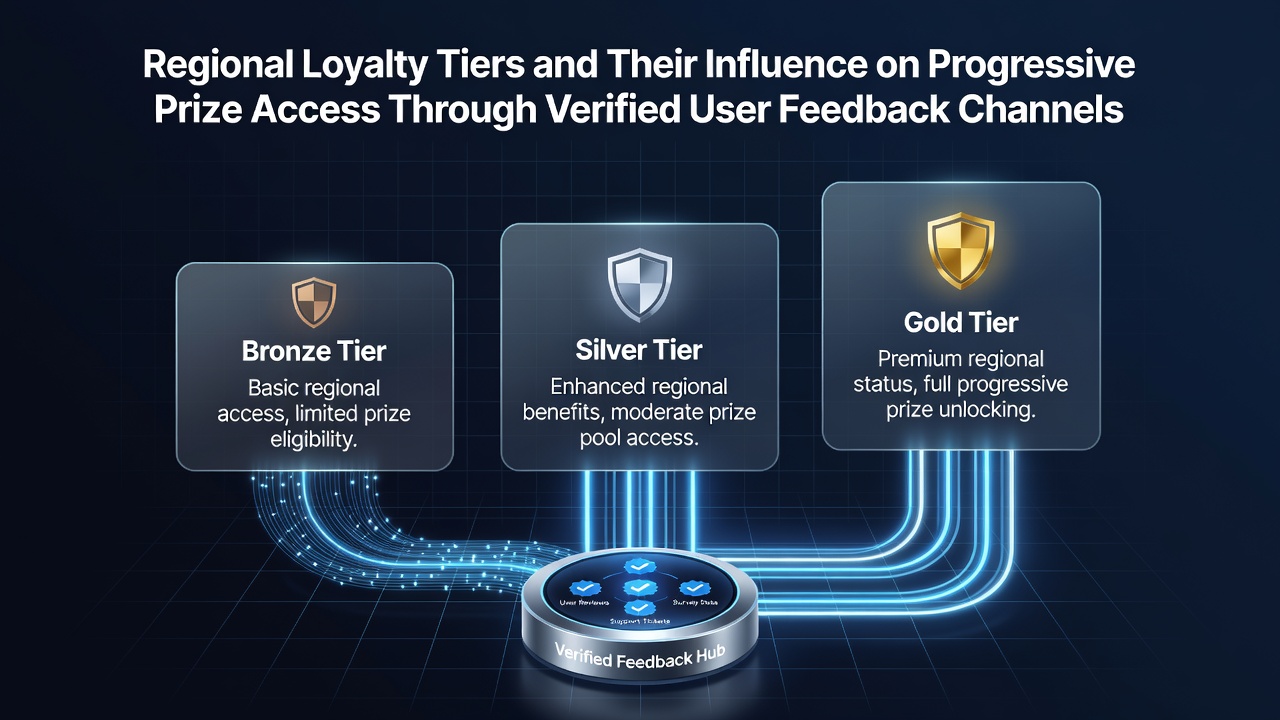
Regional Loyalty Tiers and Their Influence on Progressive Prize Access Through Verified User Feedback Channels
Regional loyalty tiers structure how participants gain entry to progressive prize pools, and verified user feedback channels serve as the mechanism that confirms eligibility across different jurisdictions. Systems track activity levels through points accumulated from consistent engagement, while feedback verification confirms that participants meet location-specific requirements before prize distribution occurs.
Structure of Regional Loyalty Programs
Operators divide loyalty structures into multiple tiers based on geographic zones, with each region applying its own accumulation rates and qualification thresholds. Data from regulatory reports indicate that participants in high-density gaming markets reach higher tiers faster due to increased session frequency, whereas those in remote areas rely on extended verification periods to advance. These tiers directly determine the percentage of progressive contributions that become accessible, and feedback channels collect session logs to validate the regional classification assigned to each account.
Verification Through User Feedback Systems
Verified feedback channels operate by cross-referencing user-submitted data against geolocation records and transaction histories. In October 2026, several platforms updated their protocols to require real-time confirmation of regional status before unlocking higher prize brackets, which reduced discrepancies in eligibility claims. The process involves automated scanning of feedback responses followed by manual review when patterns suggest inconsistencies, and this dual-layer approach maintains consistency across borders where regulatory standards differ.
Impact on Progressive Prize Distribution
Progressive prize access scales according to tier placement, and regional variations create distinct pathways for accumulation. Participants verified through feedback in one jurisdiction may receive accelerated contributions to shared pools, while those in adjacent regions follow slower accrual schedules tied to local spending caps. Figures from industry tracking services reveal that verified feedback reduces unauthorized access attempts by confirming that accounts align with stated regional parameters, which in turn stabilizes prize fund growth rates over multi-month cycles.
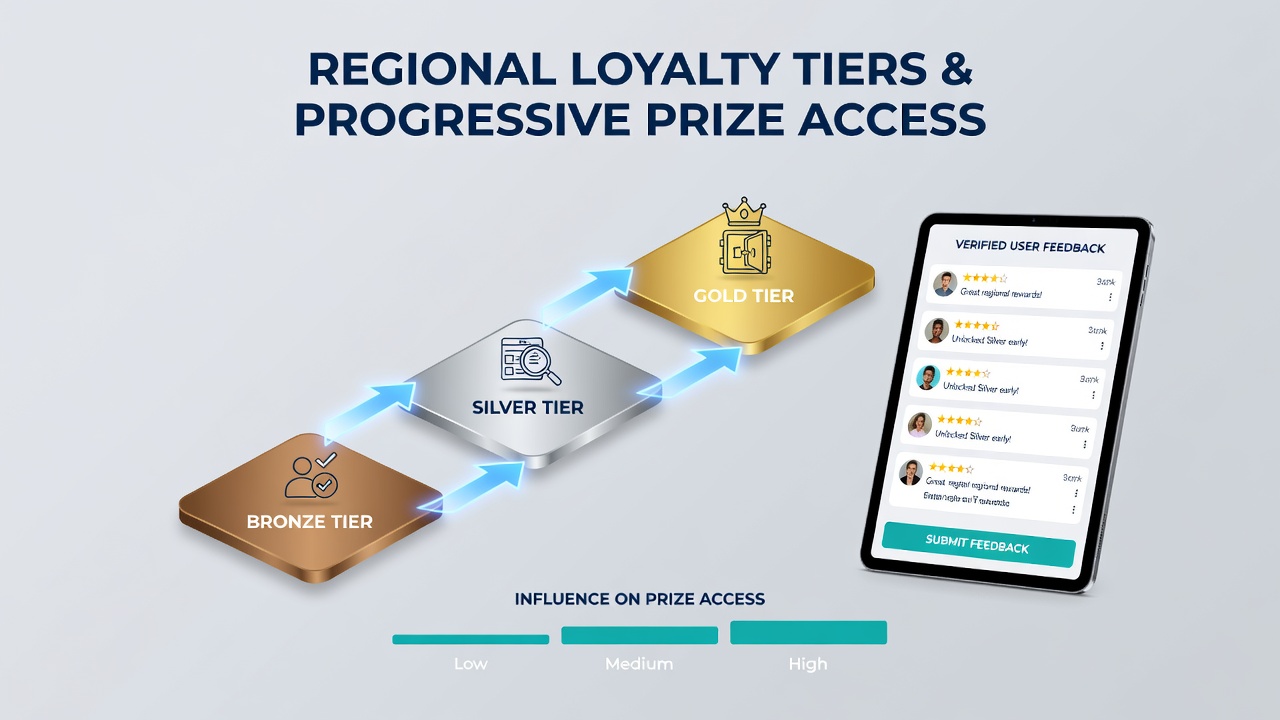
One analysis conducted across multiple platforms showed that accounts passing feedback verification within their designated tier unlocked 15 to 30 percent more of available progressive increments compared with unverified entries. The difference stems from automated flags that pause prize claims until regional compliance checks complete, and operators adjust these parameters quarterly based on aggregated feedback data.
Cross-Regional Comparisons and Data Trends
Observers note clear differences when comparing North American and European implementations. Canadian regulatory filings through the Canadian Gaming Association document how loyalty tiers in provincial systems tie feedback verification to provincial boundaries, which affects how quickly players advance toward jackpot eligibility. In contrast, Australian frameworks monitored by state authorities emphasize cumulative feedback scores that incorporate both play duration and regional tax compliance markers before progressive portions release.
Research from academic gaming studies at institutions such as the University of Nevada highlights that feedback channel accuracy improves when operators integrate biometric confirmation alongside standard location checks. This integration has produced measurable reductions in tier misclassification incidents across tested markets, and the resulting data supports more precise allocation of progressive contributions according to verified regional status.
Technical Integration of Feedback Channels
Feedback systems connect directly to backend databases that store tier histories and regional flags. When a participant submits verification details, the channel compares responses against stored transaction patterns and issues tier adjustments within the same operational cycle. Platforms that adopted these integrated channels in late 2025 reported smoother prize release processes during peak activity periods, and subsequent updates in October 2026 refined the matching algorithms to handle edge cases involving temporary travel across regional lines.
Conclusion
Regional loyalty tiers continue to shape progressive prize access through the structured use of verified user feedback channels that confirm compliance and eligibility. Data across jurisdictions demonstrates that these verification processes maintain consistent fund distribution while adapting to local regulatory requirements. Ongoing refinements to feedback protocols support accurate tier progression and equitable access to accumulative rewards based on documented regional parameters.