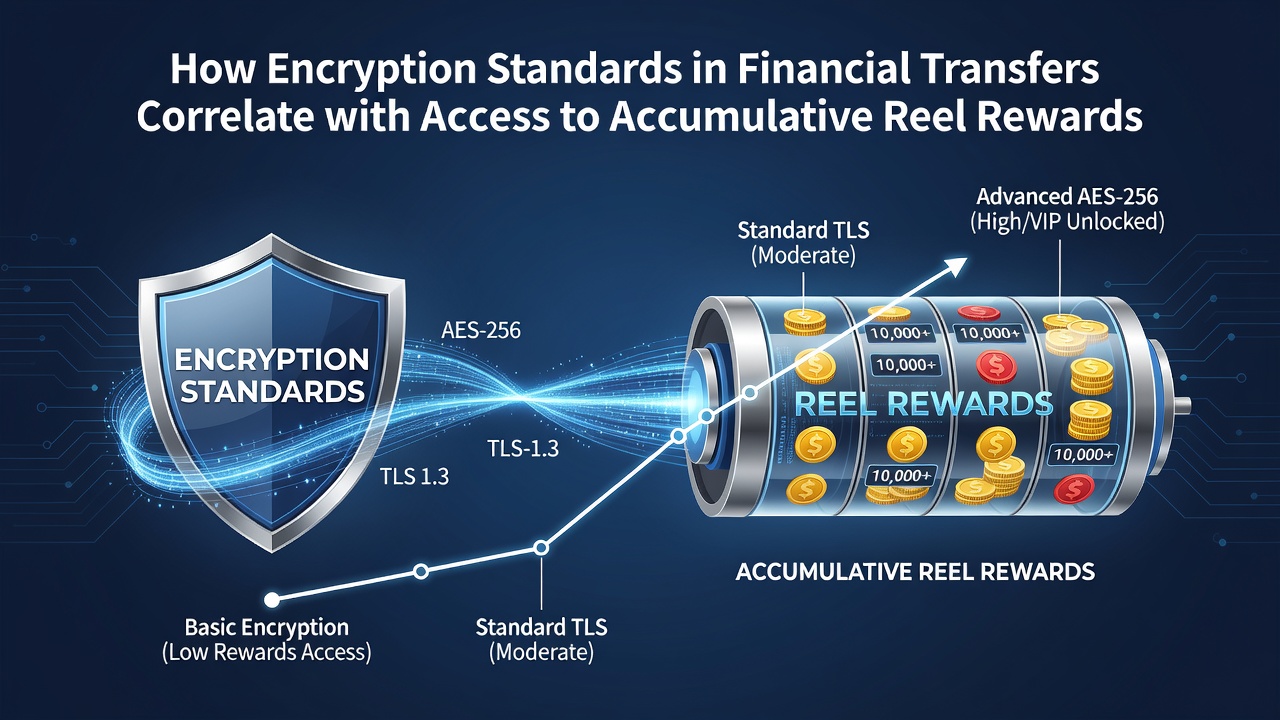
How Encryption Standards in Financial Transfers Correlate with Access to Accumulative Reel Rewards in Location-Aware Applications
Encryption standards applied to financial transfers play a direct role in determining whether users gain entry to accumulative reel rewards within location-aware applications, since these standards govern the secure movement of funds that trigger eligibility checks based on geographic data. Researchers at institutions such as the National Institute of Standards and Technology have documented how protocols like AES-256 and TLS 1.3 create the foundation for transaction verification processes that location services then cross-reference against regional access rules. Data from financial technology reports indicate that applications relying on real-time geolocation often require authenticated payment channels before releasing progressive reward pools, and weaker encryption implementations have historically led to blocked or delayed access in multiple tested environments.
Core Encryption Mechanisms in Transaction Pathways
Financial transfers processed through mobile applications incorporate layered encryption that protects account details during transmission, and this protection directly influences whether location-aware systems approve reward accumulation. Standards developed by organizations including the International Organization for Standardization specify requirements for end-to-end encryption that must accompany any payment instruction tied to geofenced reward zones. When these standards are met, transaction logs feed into backend servers that validate both the monetary movement and the user's current coordinates, enabling the system to credit reel rewards to an accumulating balance. Studies conducted by European research consortia show that applications enforcing updated encryption suites experience fewer interruptions in reward distribution compared with those using legacy methods.
Integration with Location Verification
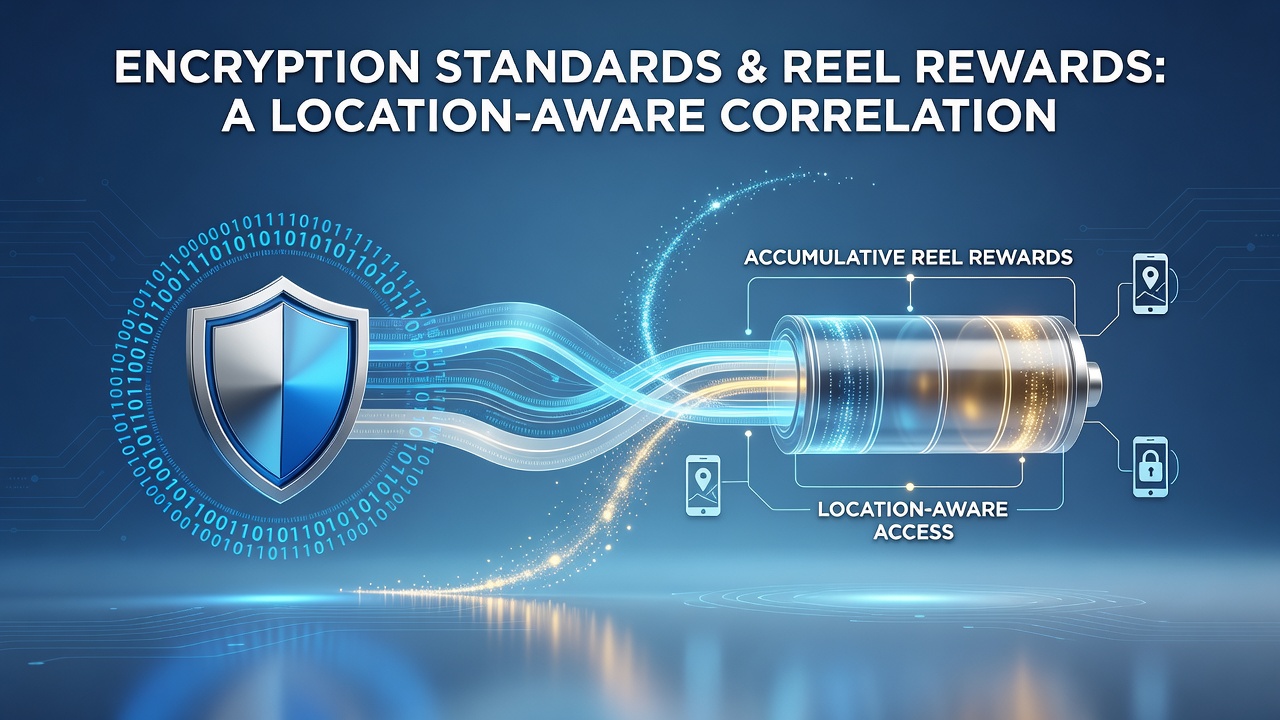
Location-aware applications combine encrypted payment confirmations with satellite and network-based positioning data to confirm user presence within designated areas, and this combination determines eligibility for accumulative rewards. According to findings published by the Australian Strategic Policy Institute, geolocation modules query secure payment gateways before unlocking progressive prize increments, which prevents unauthorized claims from outside approved regions. The process flows as a sequence where an encrypted transfer receipt arrives first, followed by a location token that the application matches against predefined boundaries, resulting in automatic reward ledger updates when both conditions align.
Applications built for cross-border use often incorporate additional certificate pinning and multi-factor authentication steps that further tie encryption strength to reward access, because any mismatch in cryptographic validation halts the location check sequence. Figures released by Canadian financial regulators in early 2025 revealed measurable differences in reward payout rates between platforms using current encryption benchmarks and those still transitioning from older standards.
Observed Patterns in Reward Eligibility
Observers tracking application performance note that platforms maintaining high encryption compliance levels report steadier access to accumulative reel rewards, since the underlying payment rails remain uninterrupted during location pings. Industry reports from the Asia-Pacific region highlight cases where financial institutions updated their transfer encryption in September 2026, after which participating applications recorded increased reward redemption volumes within geofenced zones. These updates typically involve rotating encryption keys and adopting quantum-resistant algorithms that maintain compatibility with mobile operating systems while satisfying regulatory audit trails.
One documented example involves a network of location-based entertainment applications that integrated payment gateways certified under ISO 27001, after which the correlation between successful encrypted transfers and reward accumulation became statistically significant across sampled user sessions. Data collected by academic teams at universities in Singapore demonstrate that latency introduced by encryption overhead rarely exceeds thresholds that would block real-time location validation, provided the chosen cipher suites meet current performance guidelines.
Regulatory and Technical Frameworks
Government agencies across multiple jurisdictions require financial service providers to apply specific encryption minima before allowing integration with third-party location services that manage reward systems. The Monetary Authority of Singapore and equivalent bodies in other markets publish technical specifications that link payment security levels directly to the ability of applications to process location-triggered accumulations. When transfers pass through channels meeting these specifications, reward engines receive verified transaction metadata that includes both cryptographic signatures and geolocation metadata, completing the eligibility loop without manual intervention.
Technical documentation from research institutions shows that applications failing to upgrade encryption protocols encounter systematic denials at the reward gate, because location services treat unverified payments as potential fraud indicators. This mechanism ensures that only transfers processed under approved standards contribute to the accumulative reel reward pools available inside designated areas.
Conclusion
The relationship between encryption standards in financial transfers and access to accumulative reel rewards in location-aware applications rests on verifiable technical requirements and regulatory expectations that govern both payment security and geographic validation. Evidence from standards bodies and regional regulators demonstrates that compliance with current encryption protocols enables the seamless combination of transaction authentication and location confirmation, which in turn controls reward distribution. Continued evolution of these standards, including scheduled updates referenced for September 2026, will shape how applications maintain secure pathways while supporting location-dependent reward mechanics across different markets.