
Deciphering Certification Timelines for High-Volatility Prize Pools in Cross-Platform Table Variants
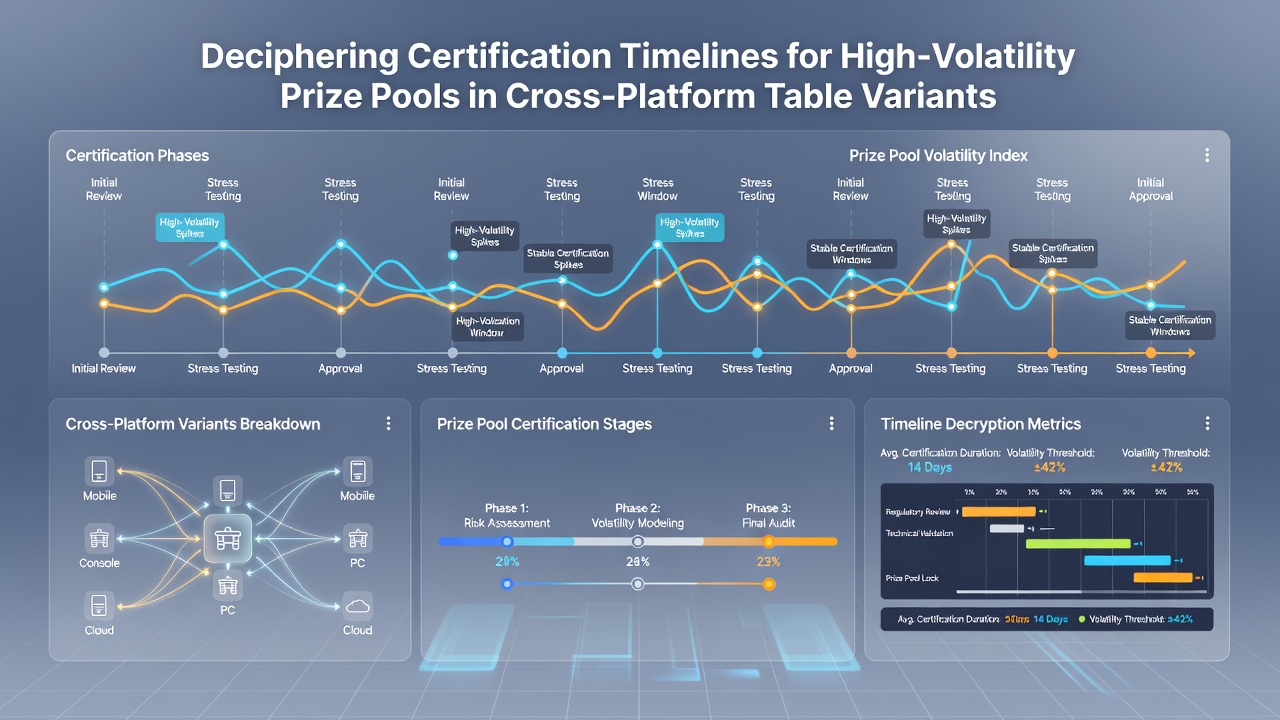
Certification processes for high-volatility prize pools in cross-platform table variants involve multiple layers of technical review, regulatory approval, and compliance verification that stretch across desktop, mobile, and integrated live dealer environments. Observers note that these timelines often extend from initial submission through final sign-off because each platform variant must undergo separate testing for randomness, payout integrity, and jackpot accumulation mechanisms. Data from industry reports shows that operators typically allocate six to eighteen months for full certification cycles when prize pools fluctuate at high volatility levels, since regulators require extensive simulation runs to confirm stability under extreme win scenarios.Core Elements of Prize Pool Certification
High-volatility prize pools combine progressive jackpots with table game mechanics such as blackjack side bets, poker tournament overlays, and roulette multiplier pools. Researchers have documented that certification bodies examine seed values, contribution rates, and reserve fund calculations before approving any cross-platform deployment. Those who've studied these systems find that the volatility parameter directly influences testing depth, as higher variance demands longer observation periods to validate statistical fairness across thousands of simulated hands. Experts observe that certification agencies coordinate with platform developers to ensure identical prize pool logic executes on both native applications and browser-based clients, eliminating discrepancies that could arise from device-specific processing delays.
Timeline Breakdown Across Jurisdictions
Regulatory frameworks in different regions set distinct benchmarks for review durations. In Nevada, for instance, the state gaming authority processes submissions for table variant certifications within ninety to one hundred twenty days when documentation includes complete source code audits and third-party randomness reports. Australian state regulators follow comparable schedules but add extra scrutiny for cross-border data transfers when prize pools aggregate contributions from multiple countries. European authorities operating under the Malta framework have published guidelines indicating that multi-platform submissions require staggered reviews, with mobile variants often receiving preliminary approval three months ahead of desktop finalization. Figures reveal that synchronization between these phases accounts for the majority of extended timelines, particularly when high-volatility parameters trigger additional stress testing protocols.
Technical Testing Phases
Initial functional testing covers prize pool accumulation across simultaneous sessions on different devices, while subsequent phases focus on failover scenarios and network interruption recovery. One documented case involved a developer submitting a hybrid poker-blackjack variant where the progressive pool reset mechanism failed during simulated latency spikes, extending the overall timeline by four months. Certification teams then mandate re-testing of all affected modules before advancing to live environment trials. Data indicates that operators who pre-stage comprehensive logging and real-time monitoring tools reduce these delays by approximately thirty percent compared with standard submissions.
Influencing Factors in 2026
November 2026 marks the scheduled rollout of updated interoperability standards from the International Gaming Standards Association, which directly affects how cross-platform table variants transmit prize pool data between certified systems. Those preparing submissions note that agencies have already begun previewing these standards, requiring applicants to demonstrate compatibility with new encryption schemas and audit trail formats. Research indicates that operators who align their development roadmaps with these forthcoming requirements experience shorter review windows once the standards take effect. Meanwhile, emerging academic studies on volatility modeling continue to inform regulatory expectations around minimum simulation sample sizes, pushing some timelines longer when prize pool algorithms incorporate machine learning elements for dynamic contribution adjustments.
Comparative Regional Approaches
Canadian provincial regulators in Ontario have adopted a modular certification model that allows partial approvals for individual platform components, enabling operators to launch desktop versions while mobile certifications remain in progress. This approach contrasts with more sequential processes observed in certain Asian markets where full cross-platform validation must conclude before any public access. According to reports from the Asia Pacific Gaming Association, such sequential models add an average of five months to total timelines for high-volatility prize pool products. Observers tracking these differences highlight that geographic variation in testing methodologies stems from differing risk assessments rather than uniform global protocols.
Practical Implications for Operators
Operators managing multiple table variants report that maintaining parallel certification tracks requires dedicated compliance teams familiar with both technical specifications and regional nuances. Evidence suggests that early engagement with certification laboratories during the design phase helps identify potential bottlenecks before formal submissions occur. In one instance, a studio adjusted its jackpot seed calculation methodology after preliminary feedback from a European testing house, thereby avoiding a six-week delay during the final review stage. Those coordinating cross-platform deployments emphasize the value of unified documentation packages that reference platform-specific appendices while preserving core prize pool logic descriptions.
Conclusion
Certification timelines for high-volatility prize pools in cross-platform table variants depend on regulatory jurisdiction, technical complexity, and alignment with evolving standards such as those anticipated in November 2026. Organizations that integrate comprehensive pre-submission testing and maintain clear communication channels with certification bodies consistently navigate these processes more efficiently. Data from multiple regions confirms that understanding each phase, from initial audit through live verification, remains essential for accurate project planning in this specialized segment of gaming technology.